
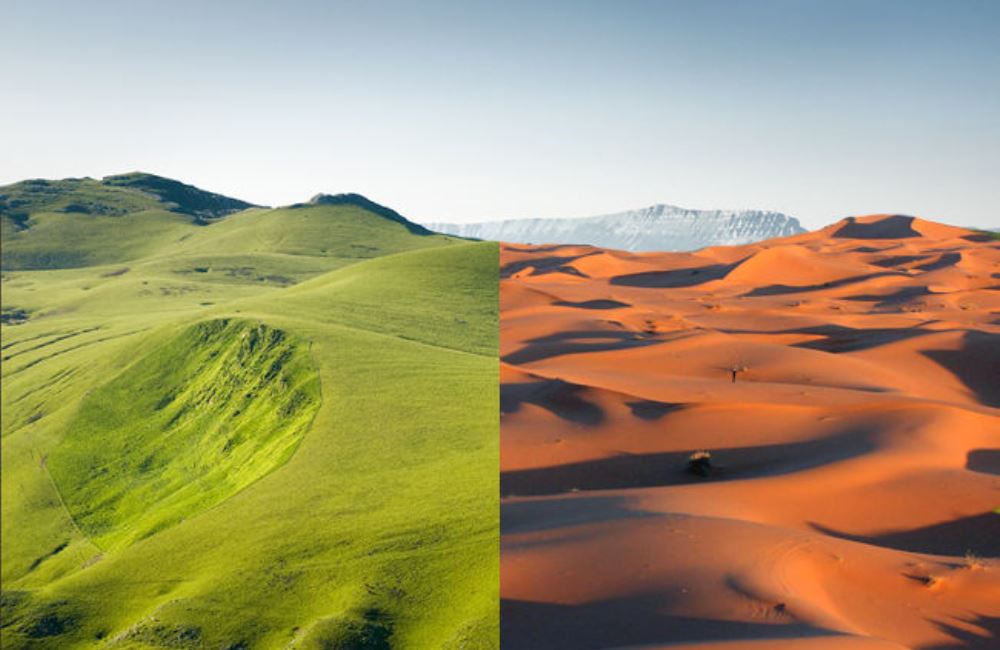
In the geological timeline of Earth, a new epoch has emerged. Known as the Anthropocene, it marks a period defined not by natural forces, but by human activity. Though scientists continue to debate the precise starting point, many trace its origins to the Industrial Revolution, approximately 200 years ago. This era saw acceleration in the human impact on the planet’s climate, ecosystems and geological processes.
Evidence of this shift is already being laid down in the Earth’s strata. Layers of rock forming today contain radioactive isotopes from nuclear testing, concentrations of plastic waste, industrial soot and the remains of concrete used in urban construction. These materials will serve as indicators of a period during which human influence fundamentally altered the biosphere.
One of the most visible effects of the Anthropocene is the rapid decline in wildlife populations. A joint report by the World Wide Fund for Nature and the British Zoological Society records an average 73% decrease in wild animal populations over the past half-century. Habitat loss, pollution and climate change are among the main drivers, pushing numerous species toward extinction.
As natural environments continue to be displaced or degraded, humans have increasingly gravitated toward urban centres. In doing so, they have become more distant from the ecosystems they once depended on. Despite this separation, a strong desire for connection with nature persists. This has given rise to an artificial version of the natural world—highly curated, commercialised and controlled.
Across the globe, a growing industry offers simulated natural experiences. In Germany, the Tropical Islands resort, located just outside Berlin, presents an entire indoor ecosystem under a vast dome. The facility includes a 10,000-square-metre rainforest, a sandy beach, waterfalls and a mangrove swamp populated with live turtles, fish, flamingos and macaws. Visitors can even take hot air balloon rides inside the sealed environment.
In the United States, Walt Disney World in Florida spans over 100 square kilometres—roughly the size of Paris. In 2022, it attracted more than 47 million visitors and generated $28.7 billion in revenue. Its Animal Kingdom park features themed attractions such as Kilimanjaro Safari and Gorilla Falls Exploration Trail, where guests observe wildlife in designed settings accompanied by music and costumed characters. One restaurant allows diners to meet cartoon mascots dressed in colonial-era safari attire before embarking on an entertainment-focused version of a trek through Africa.
Such sites are part of a wider trend. Around the world, artificial beaches, indoor ski slopes and aquariums recreate natural experiences in urban or unlikely locations. In Dubai, ski resorts operate indoors despite external desert temperatures reaching 48°C. In Chinese shopping centres, polar bears live in glass enclosures filled with synthetic snow. Some zoos replicate animal habitats using painted backdrops and carefully controlled lighting.
In many of these environments, the unpredictable elements of nature have been removed. There are no biting insects, no risk of floods or storms and no dangerous animals. Experiences are tightly scheduled and repeatable. As one observer noted, “nothing happens unless it’s part of the show.”
Even in protected areas, the pressure of tourism is changing the way nature is experienced. Yosemite National Park in California receives more than 4 million visitors annually. Long queues of vehicles, with engines running and air conditioning on, are now a common feature of the park. Sightseeing is often conducted through the windows of moving cars, with photo opportunities quickly captured via smartphones.
Climate change is further reshaping expectations. According to the European Environment Agency, snow seasons in the northern hemisphere have shortened by five days per decade since the 1970s. Resorts in the Italian Dolomites, for example, are increasingly dependent on artificial snow. In 2018, 87% of slopes were kept operational using snow machines. Some resorts operate their own power stations to run hundreds of snow guns overnight, aiming to meet tourists’ expectations for ideal conditions.
Beyond leisure activities, artificial interactions with wildlife are becoming more prevalent. Hotels in parts of Asia now feature live penguins in restaurants. In South Africa, lion farms allow tourists to interact with tame cubs and adult lions before these same animals are later sold to trophy hunters. These commercialised encounters blur the line between conservation and entertainment.
The scale of ecological disruption is significant. Only 3% of the Earth’s land area is now considered ecologically intact—meaning it retains its full complement of native species in undisturbed habitats.
While the 19th-century naturalist Charles Darwin proposed that humans were simply another species among many, modern human activity has altered that equation. Humanity now plays a dominant role in shaping the global environment. However, the ethical and scientific preparedness to manage this influence remains limited.
In his 1989 book The End of Nature, environmental writer Bill McKibben suggested that the transformation of the Earth might eventually outpace the capacity of human language and thought to describe it. He foresaw a future of extreme weather and altered ecosystems, in which the public would struggle to come to terms with change, often choosing disbelief over adaptation.
In an era driven by social media and constant digital imagery, the quest for genuine understanding is often replaced by a search for spectacle. This cultural shift contributes to a growing detachment from the realities of environmental degradation.
Despite these challenges, many potential solutions are already well understood. These include protecting natural habitats, implementing rewilding programmes, reducing plastic pollution, transitioning to renewable energy and promoting sustainable farming. The knowledge exists, but action on a large scale will require both political leadership and industry participation.
As humanity continues to navigate the Anthropocene, the growing prevalence of simulated natural environments serves as a reflection—not only of what has been lost, but of what remains at stake.
 Climate Observer